
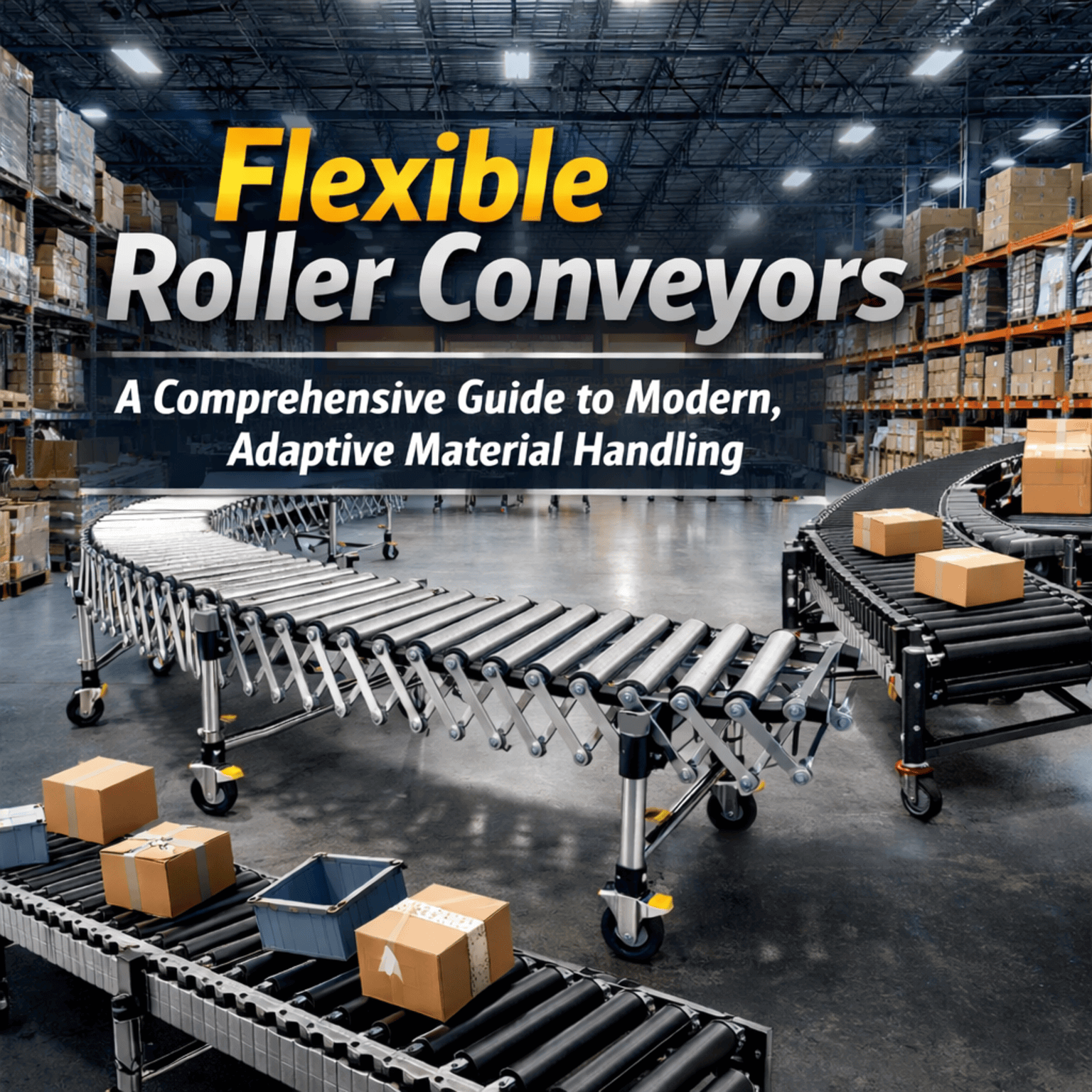
Flexible Roller Conveyors: A Comprehensive Guide to Modern, Adaptive Material Handling
Flexible roller conveyors have become an integral component of modern intralogistics, driven by the growing demand for dynamic, space-efficient, and cost-effective material handling solutions. Unlike fixed conveyor systems, flexible conveyors offer an unmatched level of adaptability, allowing organizations to optimize product flow across varying operational layouts.
This comprehensive guide examines what differentiates flexible roller conveyors, their advantages, available types, and key features—along with their applications in diverse industrial environments.
What Makes Flexible Roller Conveyors Different?
Flexible roller conveyors distinguish themselves through mobility, adjustability, and modularity. Their expanding, retracting, and curving mechanisms allow the conveyor line to adapt instantly to changing floor plans, operational tasks, or loading requirements.
Key differentiators include:
- Expandable Length: Extend or contract the conveyor as needed.
- Flexible Alignment: Navigate curves, corners, and complex warehouse layouts.
- Portability: Heavy-duty castor wheels enable easy repositioning between work zones.
- Space Optimization: Retractable frames minimize storage footprint.
- Rapid Deployment: No permanent installation or civil work required.
This flexibility makes them uniquely suited for facilities with fluctuating workload volumes and variable product flow.
Why Use Flexible Roller Conveyor Systems?
Organizations deploy flexible roller conveyors to enhance productivity, streamline workflow, and reduce material handling inefficiencies.
Core benefits include:
- Operational Efficiency
Flexible conveyors optimize the connection between inbound, processing, and outbound areas—creating a smoother, more continuous material flow.
- Reduced Labor Dependency
By eliminating excessive lifting, carrying, and manual transport, they reduce workforce fatigue and improve operational consistency.
- Multi-Industry Application
Widely used in e-commerce, FMCG, automotive, retail distribution, 3PL, and manufacturing sectors due to their universal adaptability.
- Lower Capital Expenditure
A single flexible conveyor can be used for multiple processes—making it more cost-effective than installing several fixed lines.
- Ideal for Peak or Seasonal Demand
Perfect for operations that experience periodic surges and require temporary or rapidly deployable conveying lines.
Types of Flexible Roller Conveyor Systems and Their Uses
Flexible conveyors are primarily categorized into gravity-powered and motorized (powered) versions, depending on the application and throughput requirements.
1. Gravity-Powered Flexible Roller Conveyors
Gravity conveyors rely on the natural force of gravity or manual push to move goods. They are simple, robust, and highly economical.
Applications:
- Truck loading and unloading
- Packing, sorting, and inspection lines
- Temporary or auxiliary conveyor setups
- Low-to-medium throughput operations
Suitable for:
- Corrugated boxes
- Plastic crates and totes
- Lightweight to medium-weight items
Advantages:
- Low cost of ownership
- Minimal maintenance
- Quick relocation and redeployment
- Quiet, energy-free operation
2. Powered Flexible Roller Conveyor Systems: Enhancing Throughput and Automation
Powered flexible conveyors incorporate motorized rollers or belts to facilitate automated and continuous product movement. They are engineered for demanding operations with higher workflow consistency.
Applications:
- High-throughput dispatch and receiving areas
- E-commerce fulfilment and parcel hubs
- Continuous packaging and scanning lines
- Handling heavier or consistently loaded units
Suitable for:
- High-volume distribution centers
- Automated intralogistics setups
- Medium-to-heavy duty conveying tasks
Advantages:
- Increased processing speed
- Efficient handling of heavier loads
- Controlled conveying speeds and direction
High reliability during extended operating hours
Key Features of Flexible Roller Conveyor Systems
Modern flexible conveyors incorporate advanced engineering to ensure durability, ease of use, and high operational efficiency.
Notable features include:
- Robust Expandable Frames: Allow precise length adjustment.
- Height Adjustment Mechanisms: Support ergonomic loading and unloading.
- 360° Swivel Castor Wheels: Enable effortless mobility and efficient floor layout utilization.
- Heavy-Duty Braking Systems: Ensure stability during operation.
- Optimized Roller Design: Supports various package sizes and weights.
Modular Configuration: Multiple units can be interconnected for extended conveyor lines.
Handling Different Products with Flexible Roller Conveyors
Flexible roller conveyors are capable of handling a wide spectrum of packaged goods due to their adjustable roller spacing and durable construction.
Commonly conveyed items include:
- Cardboard cartons
- Plastic totes and bins
- Parcels and courier packages
- Wrapped shipments
- Small mechanical components
- Lightweight irregularly shaped items
When required, roller centers can be modified to accommodate small or non-uniform packages.
Ergonomics and Safety Benefits of Flexible Roller Conveyors
Ergonomics and workplace safety are critical considerations in modern warehousing, and flexible conveyors support these priorities effectively.
Key ergonomic and safety advantages:
- Reduced manual lifting and carrying, minimizing injury risks.
- Adjustable working height, enabling comfortable and safe operator handling.
- Smooth and controlled material movement, reducing product damage and operational strain.
- Stable locking mechanisms ensure secure conveyor placement during use.
- Decreased worker fatigue, especially in high-volume environments.
These benefits collectively contribute to a safer, more efficient, and more compliant workplace environment
Conclusion
Flexible roller conveyors are a strategic investment for organizations aiming to enhance material handling efficiency, reduce operational costs, and improve warehouse agility. Their unique ability to expand, bend, and move makes them indispensable in fast-changing logistics environments.