
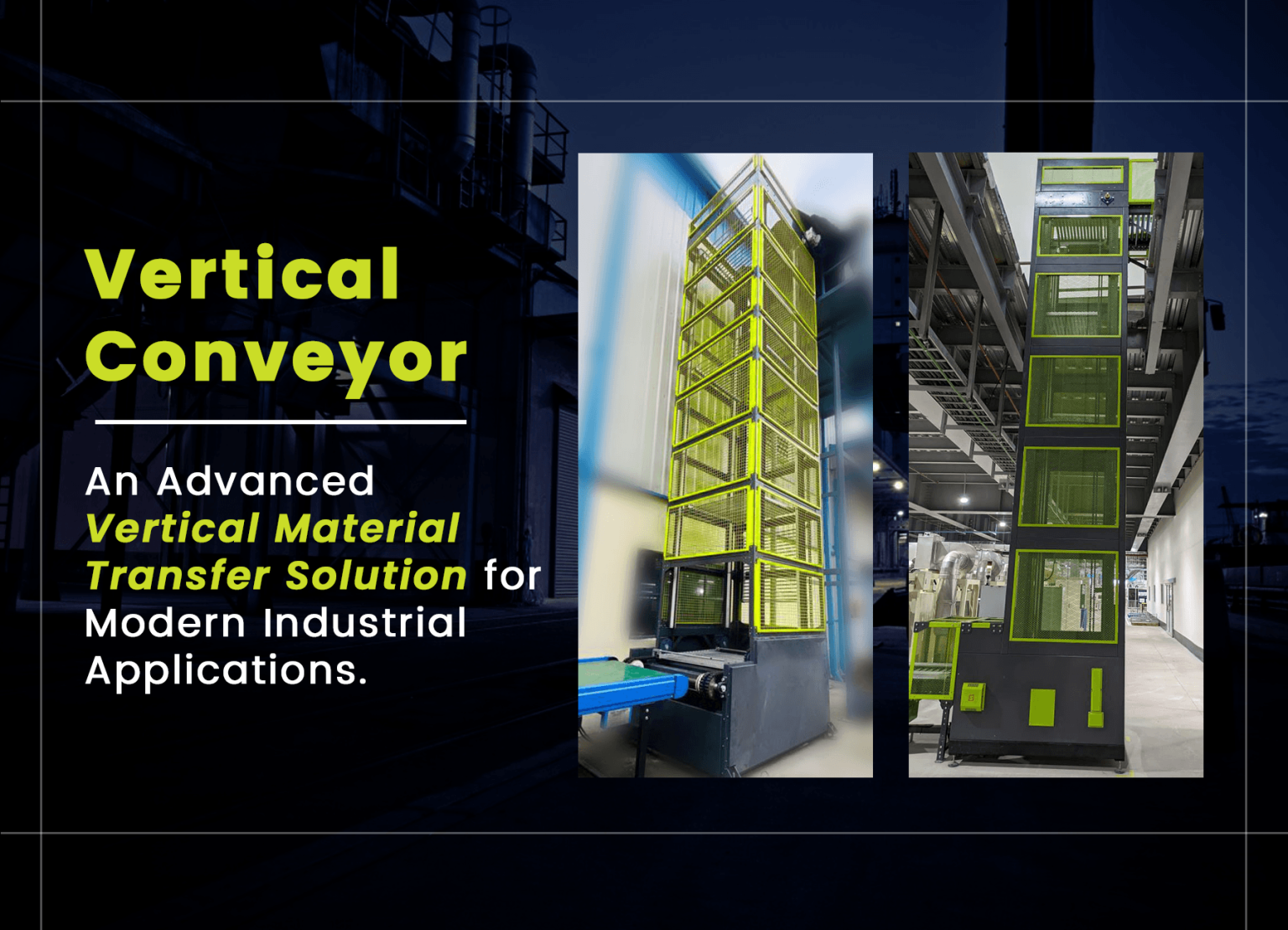
Vertical Conveyor: An Advanced Vertical Material Transfer Solution for Modern Industrial Applications
1. What is a Vertical Conveyor?
A vertical conveyor is a specialized material handling system designed to facilitate efficient floor to floor movement of goods within a facility. It is a critical component in modern automation systems where space optimization and operational efficiency are priorities. As a reliable vertical material transfer solution, vertical conveyors are used to move cartons, totes, pallets, and other materials between different elevations without interrupting the workflow. Unlike conventional horizontal conveyors, a vertical conveyor solution enables seamless integration of multi-level operations within warehouses, manufacturing plants, and distribution centers. A vertical conveyor belt or lifting mechanism ensures smooth, controlled, and safe transportation of goods, reducing dependency on manual handling and improving overall productivity.
2. Types of Vertical Conveyor
Different types of vertical conveyor systems are available depending on the application, load capacity, and throughput requirements.
Vertical Reciprocating Conveyor (VRC)
A vertical reciprocating conveyor operates on a lift mechanism and is widely used for controlled floor to floor movement of materials between two or more levels. It is suitable for handling heavy loads and is commonly used in industrial applications.
Continuous Vertical Conveyor (CVC)
A continuous vertical conveyor is designed for high-speed operations where continuous material flow is required. It uses a chain or belt-driven system to move products vertically without interruption, making it ideal for high-throughput environments such as e-commerce and logistics facilities.
Vertical Conveyor Belt System
A vertical conveyor belt system uses a continuous belt mechanism to transport lightweight to medium-weight products. It is suitable for applications where smooth handling and compact design are essential.
Spiral Vertical Conveyor
Spiral conveyors are used when continuous vertical movement is required along with space efficiency. These systems are commonly used in industries where product flow needs to be maintained without interruption.
3. Uses of Vertical Conveyor
A vertical conveyor solution is widely adopted across industries for efficient vertical material transfer and optimized operations. In warehousing and distribution centers, vertical conveyors are used for floor to floor movement of cartons and packages, enabling faster order processing and dispatch. In e-commerce and logistics operations, systems such as continuous vertical conveyor support high-speed sorting and material handling processes, ensuring quick turnaround times. Manufacturing facilities use vertical conveyors to transfer raw materials and finished goods between different production levels, improving workflow continuity. In packaging lines, vertical conveyors are integrated with automated systems to streamline packaging and dispatch operations. Retail and FMCG industries also rely on vertical conveyor systems to manage bulk material movement across multiple floors efficiently.
4. Benefits of Vertical Conveyor
Implementing a vertical conveyor provides significant operational and economic advantages.
Space Optimization
A vertical material transfer solution eliminates the need for long inclined conveyors or ramps, helping organizations utilize available space more efficiently.
Improved Operational Efficiency
Automation of floor to floor movement reduces manual intervention and increases process speed, resulting in higher productivity.
Cost Efficiency
Reduced labor dependency and optimized system performance contribute to long-term cost savings.
Enhanced Safety
Vertical conveyors minimize manual lifting and handling, reducing the risk of workplace injuries and ensuring safer operations.
Flexibility and Customization
A vertical conveyor solution can be designed based on specific application requirements, including load type, height, and throughput.
High Throughput Capability
Systems such as continuous vertical conveyor enable handling of large volumes of materials efficiently, making them suitable for high-demand operations.
Adjustable and extendable structure
- Heavy-duty design for high load capacity
- Smooth belt operation for safe handling
- Ergonomic height adjustment
- Smart control system for automation
Conclusion
A vertical conveyor plays a vital role in modern material handling by providing an efficient and reliable vertical material transfer solution. Whether it is a vertical reciprocating conveyor for heavy-duty applications or a continuous vertical conveyor for high-speed operations, these systems are essential for optimizing floor to floor movement in industrial environments. As a trusted vertical lift conveyor manufacturer in India, ATMOS Systems delivers customized and high-performance vertical conveyor solutions designed to meet the evolving demands of warehouse automation and industrial logistics.